
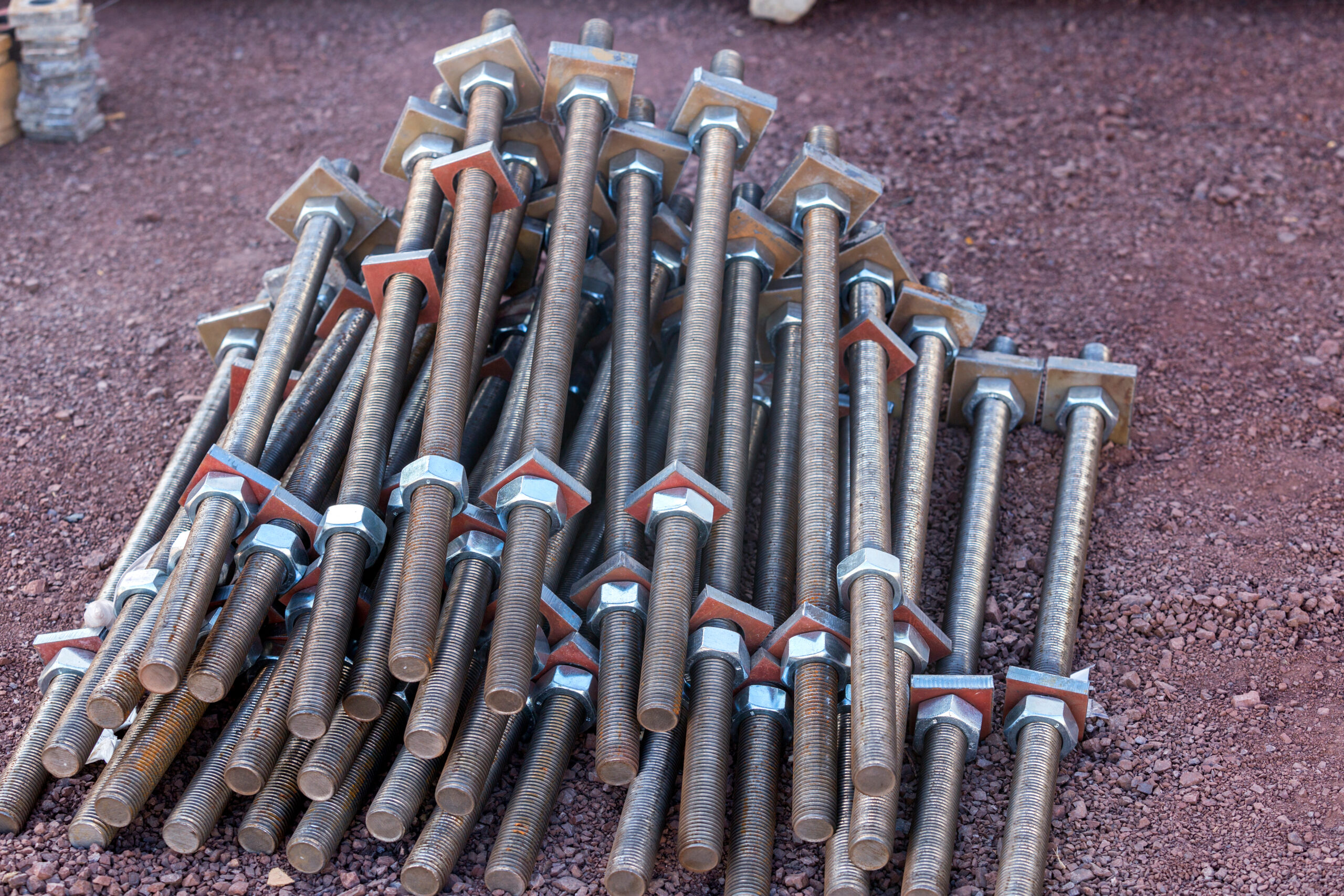
Baseplate anchors play a critical role in transferring forces from steel columns to the supporting concrete foundation. When designing anchor rods as per IS 800:2007, the process primarily focuses on checking the steel strength of the anchor in tension and shear. While these checks are essential, the Indian code provides comparatively limited provisions for evaluating the interaction between the anchor and the surrounding concrete.
In contrast, ACI 318-25 (Chapter 17) adopts a more comprehensive approach to anchor design. In addition to the inputs required for design as per IS 800, the ACI method requires several additional parameters such as anchor type (e.g., cast-in headed stud anchor or cast-in headed bolt), embedment depth, and edge distance from the concrete boundary. These parameters are used to evaluate various concrete failure modes that may govern the design of the anchorage system.
The ACI code specifically requires checks for concrete breakout in tension, pullout strength, side-face blowout, concrete breakout in shear, and concrete pryout in shear. Because these checks provide a more realistic assessment of anchor behavior, many structural engineers incorporate them even when the design is formally carried out as per IS 800.


